




Mindset: The Refinement Cycle — Iteration’s Double Edge and Platform Thinking
In the previous article we built the first two stages of a workflow: chaining independent steps A, B, and C into a workflow, then designing the Context handoff between them. If you’ve actually run that workflow for a while — congratulations, you’ve completed step one.
But it’s only step one. Because what you did was implement your existing workflow using AI. Now that AI is involved, things will inevitably shift — some steps got faster, some steps introduced new problems you didn’t have before, and some human judgment calls now need to be made explicit.
This is when you enter the refinement cycle.
Diagnosing with /insight
Make good use of the /insight command (or a similar diagnostic tool) to examine the entire workflow:
- Are the human intervention points in the right places?
- Where is the AI use inefficient or incomplete?
- Which repetitive operations could be automated?
/insight will typically give you a long list of suggestions, many of which will be “add this to your CLAUDE.md.”
But wait — think back to what we covered in the first seven articles.
CLAUDE.md should be extremely lean (article 3’s Token Budget: <60 lines). Not everything belongs in CLAUDE.md. What you need to do is classify:
- Global foundational principles (identity, core rules) → global CLAUDE.md — loaded every conversation, must stay lean
- Project-specific conventions (coding style, architecture rules) → project CLAUDE.md — only loaded in that project
- Frequently used methodologies (analysis frameworks, review processes) → Skill — loaded on demand, Progressive Disclosure
- Hard rules that must be enforced → Rule — non-overridable constraints
- System-level automation (pre-commit checks) → Hook / Script — baked into the system, not dependent on AI memory
The essence of this classification is the JIT principle from article 3’s Context Engineering, applied at the workflow level: not all knowledge should be loaded at once, and not all rules should live in the same place.
A CLAUDE.md best practices analysis from UX Planet [16] confirms this: the most successful Claude Code users are “obsessively managing context” — carefully maintaining CLAUDE.md files, actively using /clear, building living-plan document systems, and designing token-efficient tooling. This isn’t coincidence; it’s the natural outcome of Context Engineering.
Quick note: /insight results depend on your directory
/insight sometimes gives different recommendations depending on which directory you run it from. Although it pulls from all your conversation history, it filters out irrelevant conversations. So if you run it in a different directory — especially one with its own .claude configuration — the Insight Report may vary because different conversations get filtered in or out. This isn’t a bug — it’s a Context-aware feature.
Warning: The Double Edge of Iteration
The refinement cycle works — Self-Refine research on arXiv [1] shows that iterative improvement over single-pass generation yields an average gain of about 20%. ICLR 2025 research [5] also found that iterative pipelines outperform single-pass baselines by +11% on math tasks.
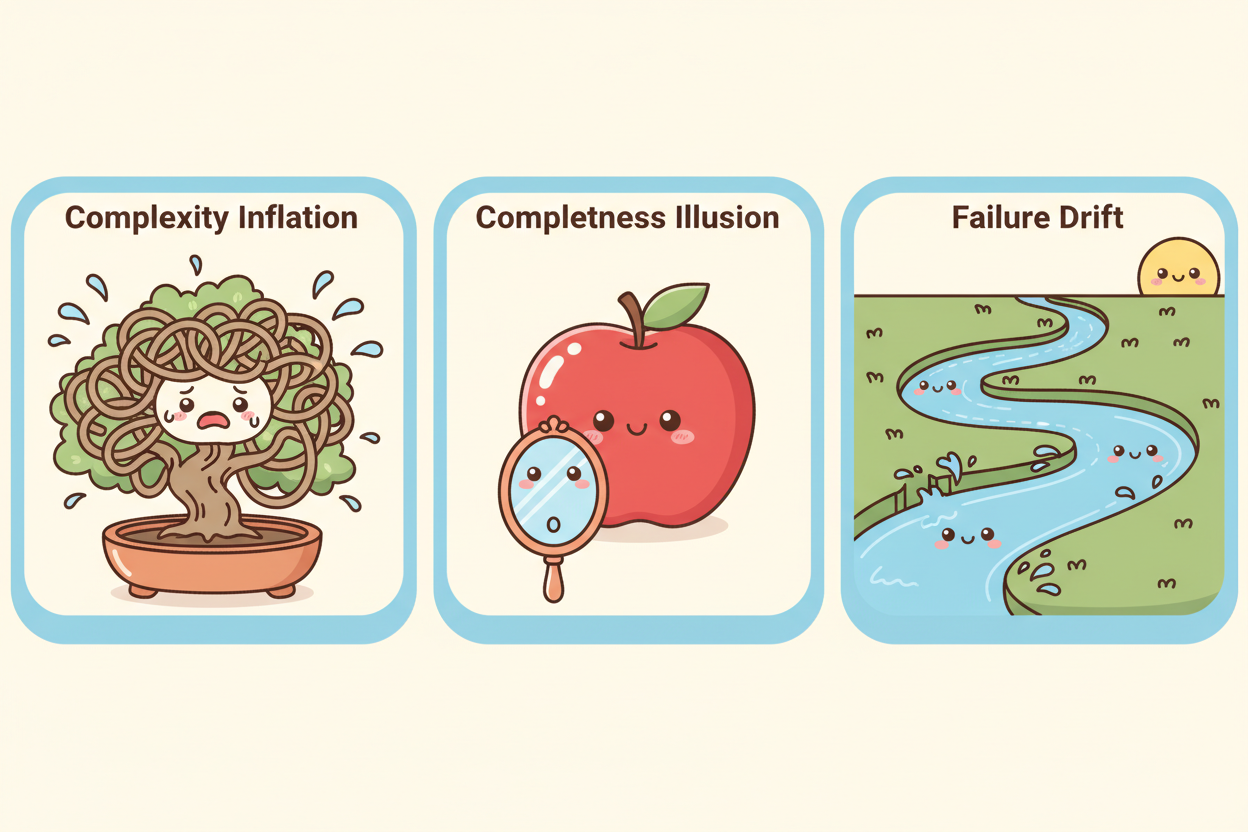
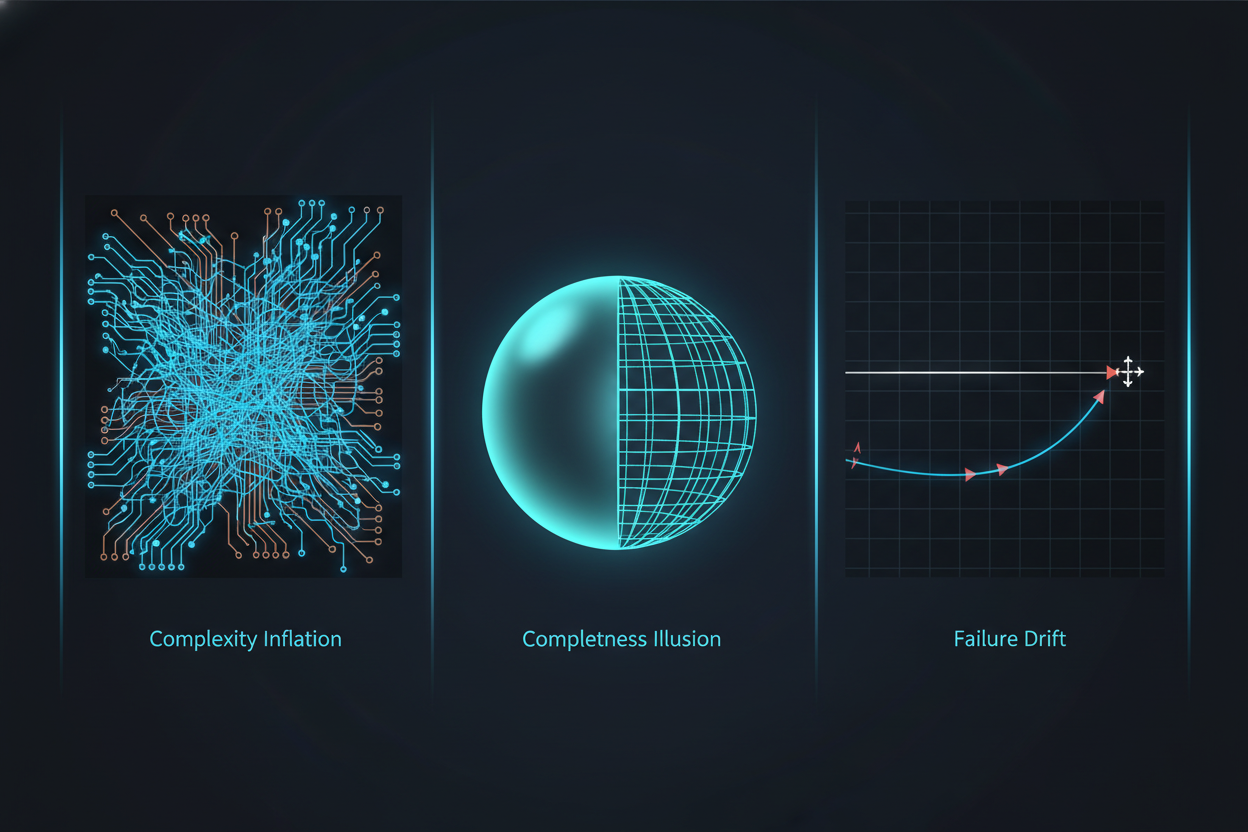
But iteration itself is a double-edged sword. There are three risks you must watch for:
Risk 1: Complexity Inflation
Each iteration tends to add rather than simplify. GitClear’s longitudinal analysis of 211 million lines of code changes [15] (2020–2024) found that the refactoring share of AI-assisted development dropped from 25% in 2021 to under 10% in 2024, while code duplication increased roughly 4x. In other words, every iteration adds things, but almost no one is removing things.
Risk 2: Illusion of Completeness
AI-generated content looks polished to an untrained eye. The human brain has a natural tendency to fill in missing information — when you review AI output, your brain instinctively fills the obvious gaps, making results appear more “complete” than they actually are. More dangerously, as outputs become increasingly refined, people do increasingly less critical review. A 2025 Springer study [7] identifies automation bias as a key challenge in human-AI collaboration: positive first impressions fuel over-trust in automation, and high workload plus time pressure only deepen that dependency.
Risk 3: Failure Drift
A deep-dive analysis on LessWrong [17] introduces an important concept: failure drift — each iteration fixes a perceived flaw, but simultaneously and unknowingly introduces a new version of the same underlying problem. The system falls into “over-correction mode,” and the meta-process guiding the corrections is itself misaligned. Unless you explicitly model how iterative improvement changes the nature of prior failures, you’ll always be vulnerable to failure drift.
A mathematical analysis of iterative review-fix loops on DEV Community [18] makes this even more concrete: iteration has a precision ceiling that cannot be exceeded regardless of how many rounds you run. And when the evaluator shares the same blind spots as the generator, iteration is just rearranging errors, not eliminating them. In practice, the first 1–2 rounds deliver the biggest gains; 3–5 rounds for critical content, 2 rounds for general content; beyond that, returns drop sharply.
So what’s the right way to iterate?
Put the benefits and the risks side by side:
- Improvement magnitude — Benefit: ~20% average gain over single-pass [1]; Risk: sharply diminishing returns after 2 rounds [18]
- Quality trajectory — Benefit: significant improvement in rounds 1–2 [5]; Risk: potential failure drift afterward [17]
- Complexity — Benefit: incrementally refines the system; Risk: each iteration tends to add rather than simplify [15]
- Human review — Benefit: correction opportunity each round; Risk: the more polished the output, the less critical the review [7]
Iteration isn’t bad — uncontrolled iteration is. You need to build explicit checkpoints into the refinement loop:
- Set an iteration ceiling — 2 rounds for general refinement, 3–5 for critical decisions; stop and reassess if you go beyond that
- Check complexity each round — Is this iteration adding or simplifying? If you’ve been adding for three consecutive rounds, pause
- Introduce an outside perspective — This is the “cross-audit” principle we’ll cover in the next article; it’s the most effective way to break out of failure drift
- Stay skeptical — The more perfect the output looks, the more you should pause and ask: “Is there a problem here I’m not seeing?”
From Moving Fast in Small Steps to Platform Thinking
There’s one more high-level mindset shift that needs to happen at this stage.
In the first two stages, moving fast in small steps is exactly right — you need to validate logic and assumptions quickly, confirming whether the workflow’s core hypotheses hold. But once you’ve completed your first full workflow and start entering repeated refinement, you need to start viewing the overall infrastructure through the lens of platform thinking.
Kissflow’s 2026 trend report [24] notes that organizations treating agentic AI as incremental improvement will fall behind those building complete platforms. Menlo Ventures data [11] is even more specific — AI adoption sits at 78%, but only 21% of organizations have done deep workflow redesign.

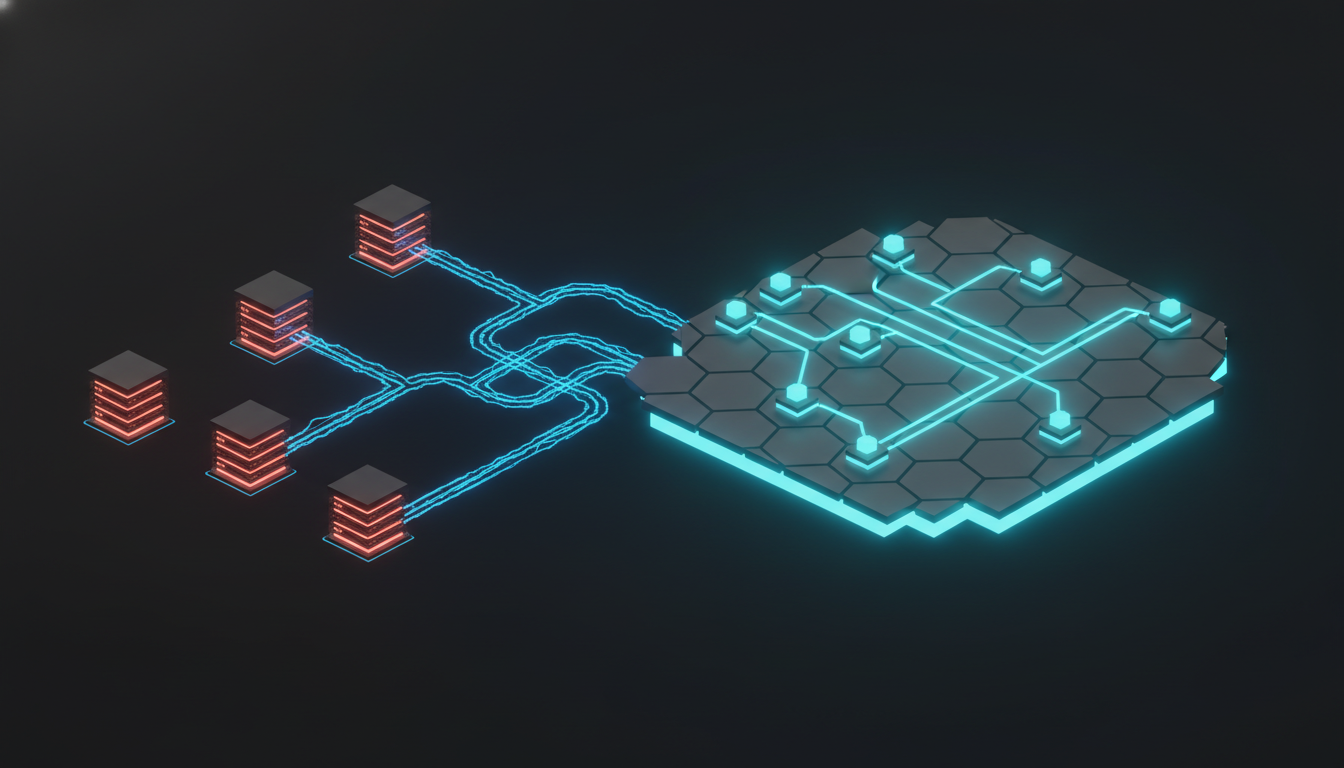
What does that mean? Most organizations are stuck in “local optimization” — they’ve made A work well, made B work well, but because they lack platform thinking, there’s a massive gap and leakage between A and B.
So the refinement in stage three isn’t just about refining individual workflows — it’s about regularly stepping back and auditing the whole system with a global lens:
- Are there duplicated Skills or Context shared across different workflows?
- Does your governance framework cover all workflows, or just the ones you use most often?
- If you added a new workflow right now, could the existing infrastructure support it — or would you be starting from scratch?
IBM’s AI Governance Implementation Guide [23] also notes that governance is shifting from “after-the-fact auditing” to circuit breakers embedded in the pipeline — making approvals and audit trails integrate into workflows the way code commits do. That’s platform thinking in concrete form.
Small steps validate ideas; platform thinking solidifies the foundation. The two aren’t mutually exclusive — they’re the right emphasis at different stages.
In the next article, we’ll cover the second half of the workflow journey: evolving to an Agent Team, discovering where human value lies, and the three core principles that run through this entire mindset.
References
[1] Madaan et al., “Self-Refine: Iterative Refinement with Self-Feedback” https://arxiv.org/abs/2303.17651
[5] “Think Thrice Before You Act” (ICLR 2025) — iterative pipeline effectiveness on math tasks https://proceedings.iclr.cc/paper_files/paper/2025/file/6882dbdc34bcd094e6f858c06ce30edb-Paper-Conference.pdf
[7] “Exploring Automation Bias in Human-AI Collaboration” (Springer, 2025) https://link.springer.com/article/10.1007/s00146-025-02422-7
[11] Menlo Ventures, “State of GenAI in Enterprise 2025” — 78% adoption vs. 21% deep redesign https://menlovc.com/perspective/2025-the-state-of-generative-ai-in-the-enterprise/
[15] GitClear longitudinal analysis (211M lines, 2020–2024) — AI-assisted refactoring share drops, duplication increases 4x https://arxiv.org/abs/2512.11922
[16] UX Planet, “CLAUDE.md Best Practices” — successful users obsessively manage context https://uxplanet.org/claude-md-best-practices-1ef4f861ce7c
[17] LessWrong, “The Illusion of Iterative Improvement” — the failure drift concept https://www.lesswrong.com/posts/QMqdrTfmuJXsAcopq/the-illusion-of-iterative-improvement-why-ai-and-humans-fail
[18] DEV Community, “Iterative Review-Fix Loops Formula” — mathematical analysis of iteration’s precision ceiling https://dev.to/yannick555/iterative-review-fix-loops-remove-llm-hallucinations-and-there-is-a-formula-for-it-4ee8
[23] IBM, “AI Governance Implementation Guide” — governance embedded in the pipeline https://www.ibm.com/think/insights/ai-governance-implementation
[24] Kissflow, “7 AI Workflow Automation Trends 2026” — platform thinking vs. incremental improvement https://kissflow.com/workflow/7-workflow-automation-trends-every-it-leader-must-watch-in-2025/
Support This Series
If these articles have been helpful, consider buying me a coffee